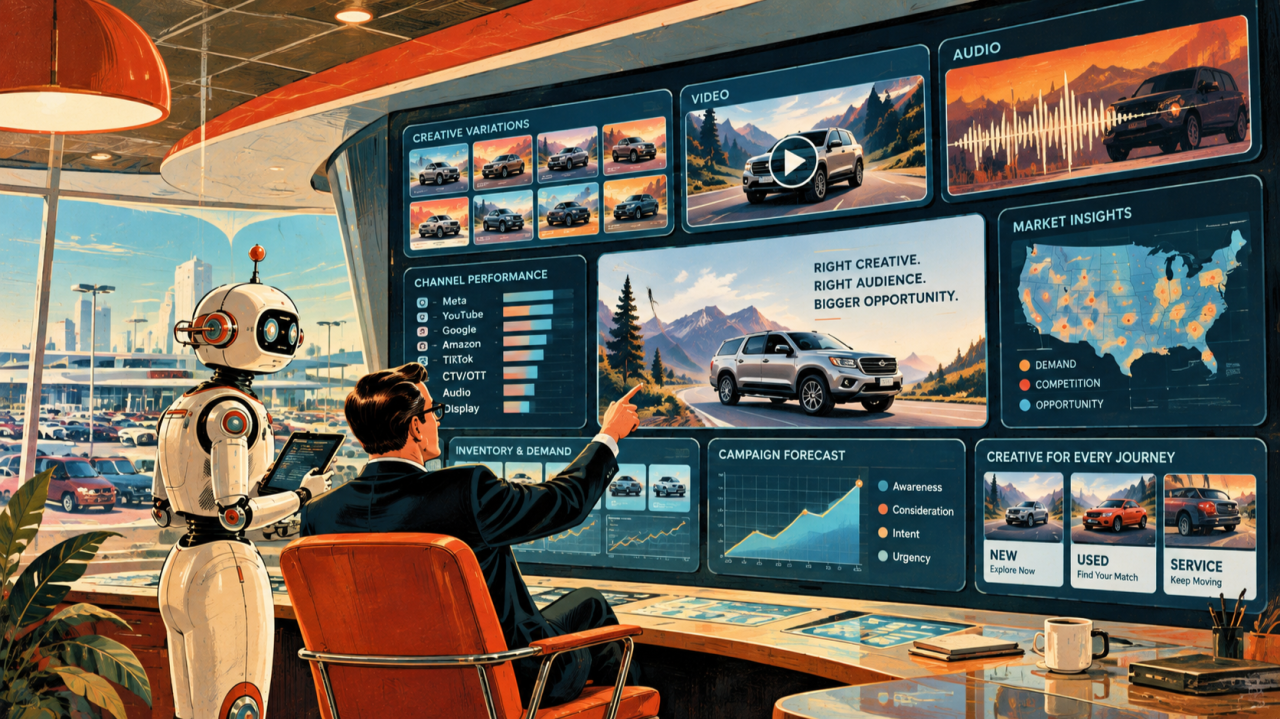

For years, dealership advertising has been built around a relatively simple premise: find consumers when they’re actively shopping and compete aggressively for their attention. Search campaigns target high-intent buyers. Inventory ads target consumers comparing vehicles. Retargeting campaigns follow website visitors who have already engaged with dealership content. Success is measured through clicks, leads, conversions, and other signals that suggest a shopper is moving closer to a purchase decision.
The approach makes sense. The challenge is that consumers may be making some of their most important decisions before any of those interactions occur.
Recent research highlighted by Car Dealership Guy suggests that.
71% of the brands in a buyer’s consideration set are selected before active shopping begins.
At the same time, the average consideration set has reportedly narrowed from five brands to three. If those findings are directionally correct, they raise an important question for dealerships: what happens if the battle for market share is being won before a shopper ever submits a lead, searches for a vehicle, or visits a dealership website?
That question becomes even more relevant when you consider how much of the industry’s advertising investment remains focused on demand capture. Most dealership marketing is designed to engage consumers who have already entered the market. The assumption is that if a dealer can reach shoppers at the right moment, present the right offer, and create enough urgency, the opportunity can be won.
But what if the shopper has already decided which brands and dealerships deserve consideration?
What if the search itself is simply the final step in a decision-making process that started months earlier?
The issue is not that lower-funnel advertising has become less valuable. Search, inventory campaigns, and retargeting remain essential. The issue is that many dealerships have become increasingly dependent on those channels while underinvesting in the stages that shape future demand. As competition intensifies and acquisition costs continue to rise, more dealers are finding themselves competing for the same shoppers at the exact same moment, often after key preferences have already been established.
Streaming Changes When Influence Happens
For years, the conversation around streaming TV has focused on targeting capabilities, reporting improvements, and measurement advancements. Those benefits are real, but they may not represent the most important shift.
The bigger opportunity is that streaming allows dealerships to influence consumers before they become active shoppers.
Traditional television offered scale but limited precision. Search offers precision but generally engages consumers after they have entered the market. Streaming sits between those two worlds. It combines the reach and impact of video with the ability to target specific audiences based on factors such as vehicle ownership, trade-cycle indicators, competitive brand ownership, geography, lifestyle attributes, and other household-level signals.
That changes the role of advertising.
Instead of waiting for consumers to raise their hand, dealerships can begin building familiarity and preference much earlier in the buying journey. They can engage current owners approaching a trade cycle. They can introduce themselves to competitive make owners. They can remain visible to audiences that fit their ideal customer profile months before those consumers begin researching vehicles.
In many ways, the value of streaming is less about reaching active shoppers and more about influencing future shoppers.
Search captures demand.
Streaming helps shape future demand.
What a Modern Streaming Strategy Looks Like
If buyers are making decisions before active shopping begins, then dealership streaming strategies need to be designed differently than traditional television campaigns.
The first step is audience selection.
Rather than buying broad reach across an entire DMA, dealers should focus on audiences most likely to influence future sales and service demand. This may include current owners approaching a trade cycle, competitive make owners, service customers who have not returned recently, luxury intenders, or households within key growth ZIP codes. The goal is not simply to reach more people. The goal is to reach the right people before they enter the market.
The second step is creative alignment.
Many streaming campaigns still rely heavily on payments, incentives, and inventory offers. While those messages have value, they are often more effective once active shopping has begun. Earlier in the journey, creative should focus on dealership positioning, ownership experience, customer benefits, community presence, and the reasons consumers should consider the dealership when the time comes to buy. The objective is to create familiarity and preference before shoppers begin comparing inventory.
The third step is integration.
Streaming should not operate independently from the rest of the marketing strategy. Consumers exposed to streaming creative should encounter complementary messaging across social media, video platforms, search, and inventory campaigns. As shoppers move closer to a purchase decision, messaging can become increasingly product and offer focused. The dealership creates a more consistent experience while improving the effectiveness of every channel in the funnel.
Finally, dealerships should establish success metrics that align with the role streaming is intended to play. Market share growth, branded search activity, direct website traffic, sales performance relative to the market, and geographic share gains often provide a clearer picture of long-term impact than lead volume alone.
The Real Metric Is Market Share
Eventually, every conversation about streaming seems to arrive at the same question:
How many leads did it generate?
It’s a reasonable question, but outdated question and it often assumes that streaming should be evaluated the same way as search.
Search is designed to capture existing demand. Streaming is designed to influence future demand. Those are different jobs, yet many dealerships attempt to measure both channels through the exact same lens.
Consider a consumer who sees dealership messaging through streaming over the course of several months. Eventually that consumer conducts a branded search, visits the website directly, engages with inventory, and purchases a vehicle. In most reporting environments, the credit is likely assigned to one of the final interactions. The search click receives credit. The website visit receives credit. The lead submission receives credit.
The influence that occurred before those actions often receives little attention, if any.
As a result, dealerships can find themselves overvaluing channels that harvest demand while undervaluing channels that help create it. Over time, marketing becomes increasingly focused on capturing shoppers who already exist rather than expanding the pool of consumers who may choose the dealership in the future.
This is why market share may be a more meaningful measurement than lead volume when evaluating upper-funnel channels.
Dealerships do not grow because they generated the cheapest leads. They grow because more consumers chose them than the competition.
That outcome tends to show up in different ways. Branded search activity increases. Direct website traffic grows. Sales performance improves relative to the market. Market share expands within key geographic areas. More consumers enter the shopping process already familiar with the dealership.
That is ultimately the outcome that matters.
The Bigger Opportunity
The recent CDG research reinforces something many dealerships are beginning to recognize:
Buyers are making decisions earlier than many marketers realize.
If consumers are narrowing their consideration set before active shopping begins, then dealerships that focus exclusively on active shoppers may be showing up too late.
That doesn’t mean streaming should replace search, social, or inventory advertising. It means dealerships need an integrated omnichannel strategy that both creates demand and captures it. Some channels influence future buyers. Others convert active shoppers. Both matter.
Streaming TV gives dealerships an opportunity to enter the conversation earlier.
And in a market where consideration is often formed before shopping begins, that may be one of the most valuable opportunities available to dealers looking to grow market share.