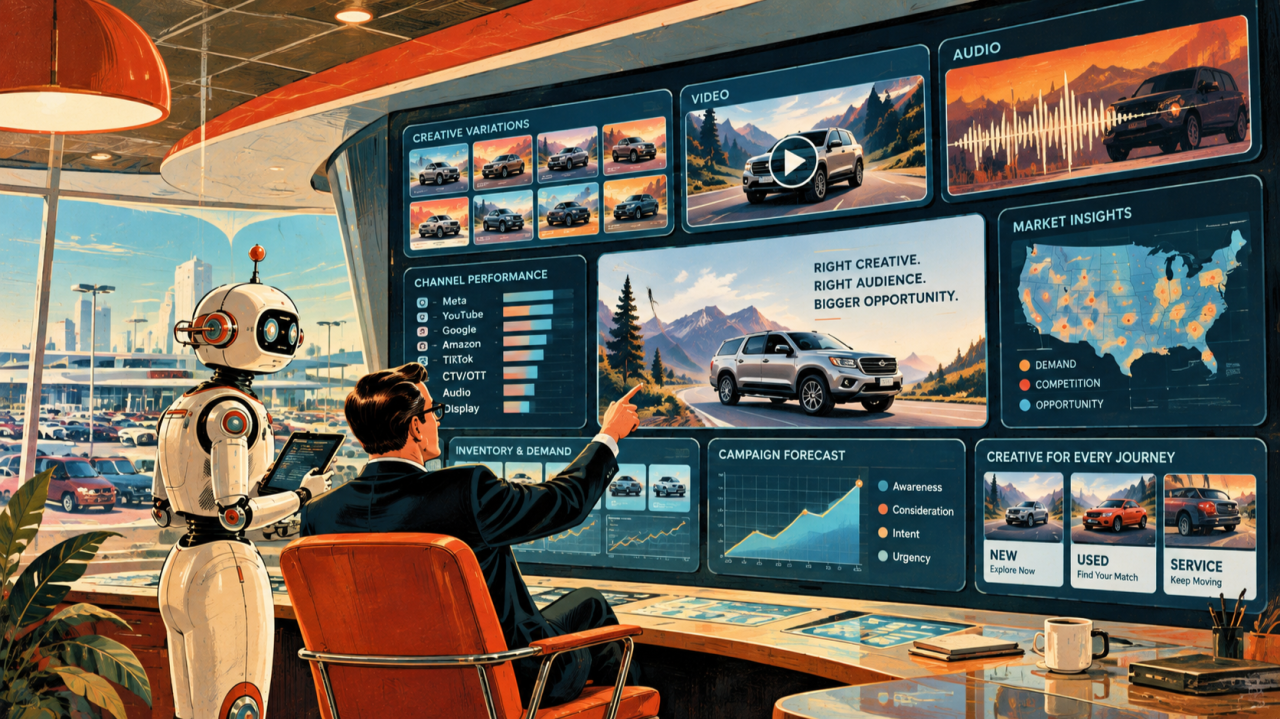
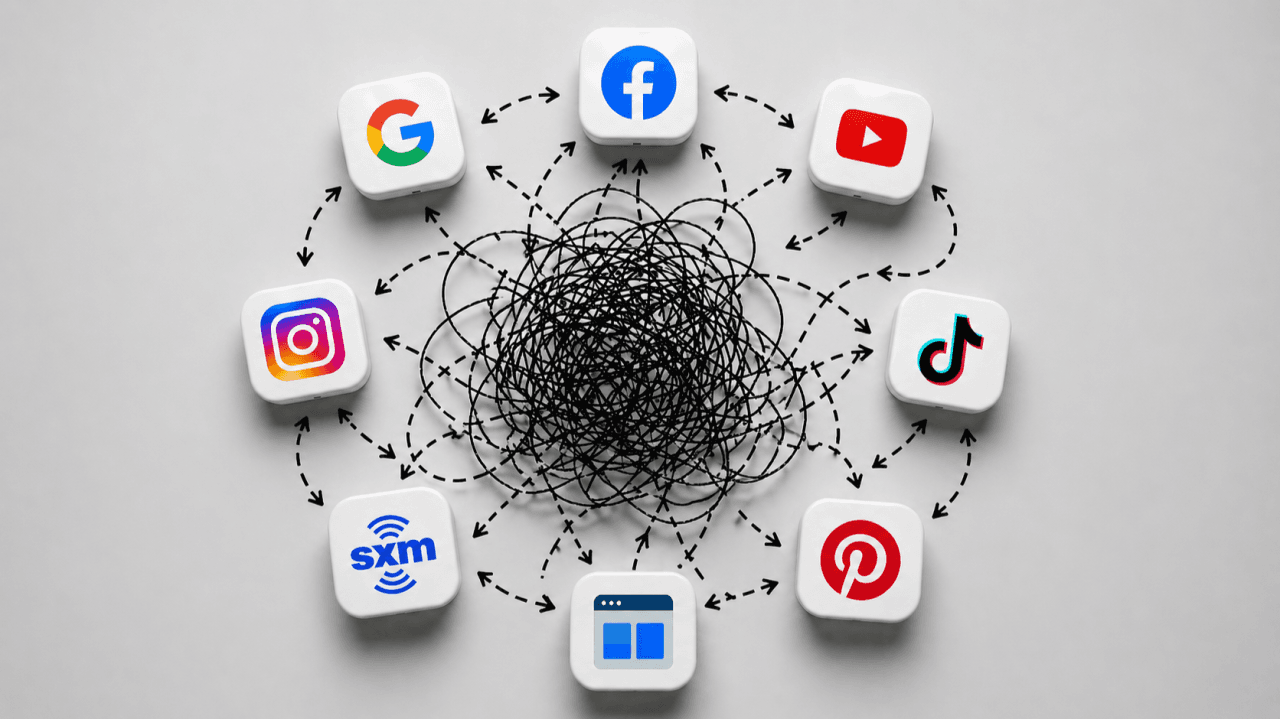
Most dealership marketing doesn’t fail because of effort. It fails because of structure. There’s no shortage of spend, campaigns, or vendors. If anything, there’s more activity than ever.
But activity isn’t the issue. Connection is.
The Industry Built a Fragmented Model and Called It Strategy
Search is doing one thing. Social is doing another. Streaming, display, and email are all running in parallel.
Different messages. Different timing. Different objectives. And somehow, we expect it to add up to growth.
But it doesn’t. It creates noise.
Because consumers don’t experience your marketing in channels. They experience it as a journey, where each moment builds on the last. When those moments don’t connect, the impact doesn’t build either.
Fragmentation Doesn’t Just Limit Performance. It Caps It.
Here’s the part most people miss.
Fragmented marketing doesn’t just underperform. It has a ceiling.
You can optimize each channel individually. Lower CPL. Improve CTR. Increase conversion rates. On paper, everything looks better.
But if those channels aren’t working together, you’re just making disconnected pieces more efficient.
You’re not increasing demand. You’re just competing harder for the same demand.
The Buyer Journey Already Went Omnichannel. You Didn’t
Today’s buyer doesn’t move in a straight line.
They might see a video while scrolling, hear a brand while streaming audio, watch a longer-form spot on connected TV, then search when they’re ready.
That sequence isn’t planned.
But your marketing should be. Because when messaging connects across those moments, something changes. Recognition builds faster. Trust builds earlier. Decisions happen with less friction.
Even the Platforms Are Telling You This
This isn’t theory anymore. It’s how the largest media companies are thinking about growth.
As our partners at SiriusXM Media put it:
“Omnichannel execution amplifies your entire media mix: Extend your campaigns across streaming, podcasts, SiriusXM, video, and display to unlock incremental reach and frequency where it matters most.”
That last part matters. Incremental reach and frequency.
Not duplicated impressions. Not isolated clicks. Incremental impact.
What Actually Changes With an Omnichannel Strategy
When it’s done right, three things shift.
- Messaging becomes sequential, not repetitive. Each channel builds on the last instead of saying the same thing louder.
- Timing aligns with behavior. Awareness shows up early, consideration follows, and intent is captured when it’s real.
- Performance compounds. Channels stop competing with each other and start reinforcing each other.
That’s where growth comes from.
The Real Question
If you turned off one of your major channels tomorrow, would anything actually change?
If the answer is no, then your channels aren’t connected. They’re just coexisting.
And that’s the difference between marketing that stays busy… and marketing that actually grows market share.Justin Friend click to view the linkedin profile of : Justin Friend