Justin Friend click to view the linkedin profile of : Justin Friend
Do not mistake, shoppers are researching earlier, consuming more video, and forming preferences long before a lead form is filled out or a search query is typed.
According to Google, more than 90 percent of automotive buyers say online video influences their purchase decision.
That influence happens upstream, during research and consideration, not at the point of conversion.
Yet most dealer marketing dollars are still concentrated at the bottom of the funnel.
That disconnect is why marketing costs are rising while predictability declines.
TikTok reports that automotive content drives roughly 2x higher ad recall, with discovery happening passively rather than through active intent. Similarly, Pinterest has consistently shown that automotive intenders plan purchases weeks or months before submitting a lead, saving and revisiting content long before entering a traditional funnel.
Behavior moved earlier. But, spend largely did not.
Instead, most strategies still try to capture demand after the decision is already forming (or has been made). Search is asked to be the growth engine even though it primarily captures intent that already exists. Social is treated as lightweight awareness. Video is layered in without a defined role.
This outcome is predictable.
CPMs rise. CPCs rise. Cost per lead climbs. At the same time, lead quality becomes a real problem. That is not a platform problem. It’s a timing problem.
Most investment still chases outcomes instead of creating them.
This feeds one of the most damaging beliefs in automotive marketing.
More leads do not create better outcomes.
When volume becomes the objective, cost and risk increase while quality becomes inconsistent. Sales teams experience it first through lead fatigue, uneven close rates, and declining confidence. The blame moves downstream to the CRM, the BDC, or the consumer, while the real issue sits upstream.
If demand is not shaped early, captured intent becomes non-existent. Performance becomes reactive and unpredictable.
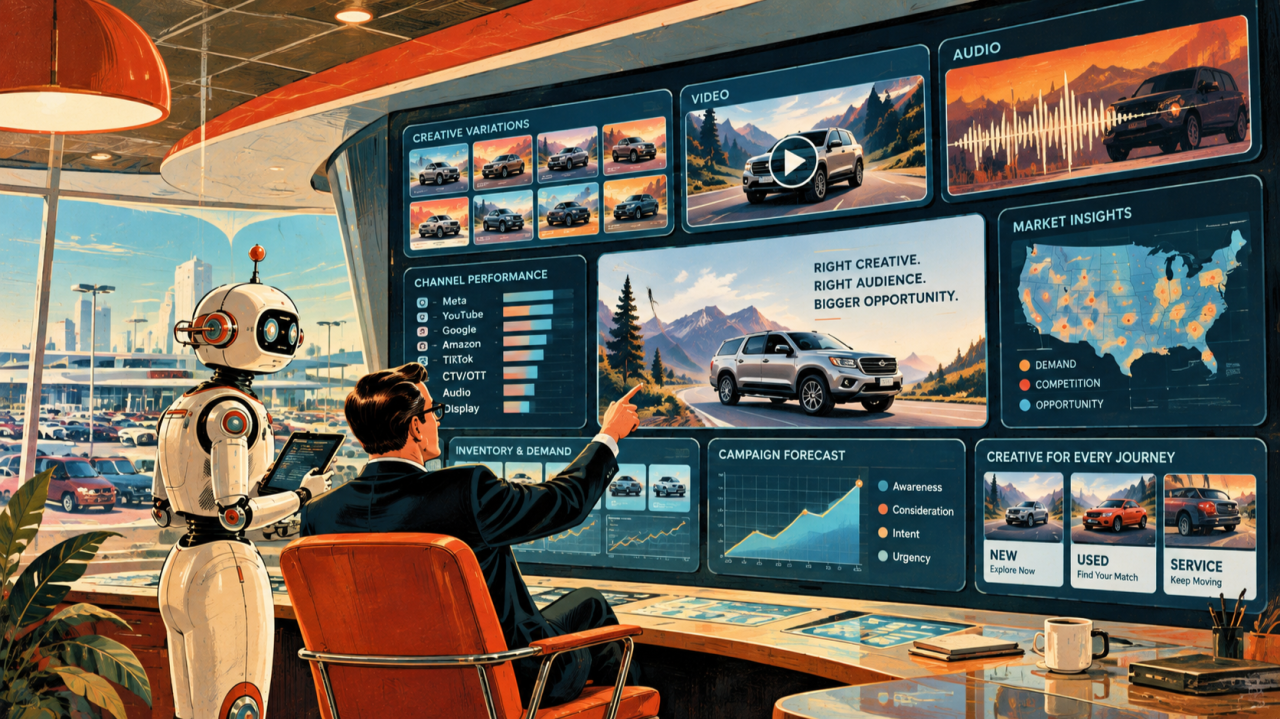
The dealers seeing the most stability today are not chasing every click. They are communicating where shoppers actually spend time. They influence decisions earlier using content designed for awareness and consideration. They refresh creative at the pace of attention, not at the pace of monthly reports.
Each channel has a job. Each stage supports the next.
That creates leverage.
Not just volume. Certainty.
The buying journey changed.
If a strategy is still built to win the final click instead of influence the earlier decision, rising costs are not surprising. They are unavoidable.