Justin Friend click to view the linkedin profile of : Justin Friend
A quick Google search for “automotive AI” yields hundreds of results.
- Chatbots.
- Lead response tools.
- Service scheduling assistants.
- Conversational sales agents.
Most of the AI currently being marketed to dealerships falls into one of two categories:
Conversational AI or agentic AI.
These tools are designed to interact with customers. They answer questions, schedule appointments, respond to leads, and help sales teams manage communication more efficiently.
There is real value in that. Responding faster to leads improves conversion. Better customer interaction improves experience. But I would argue that is just one piece of the puzzle.
Because while the industry is focused on AI answering questions from shoppers, very little attention has been paid to something far more impactful:
Using AI to decide how advertising dollars should move.
Another, Possibly Bigger Opportunity for AI
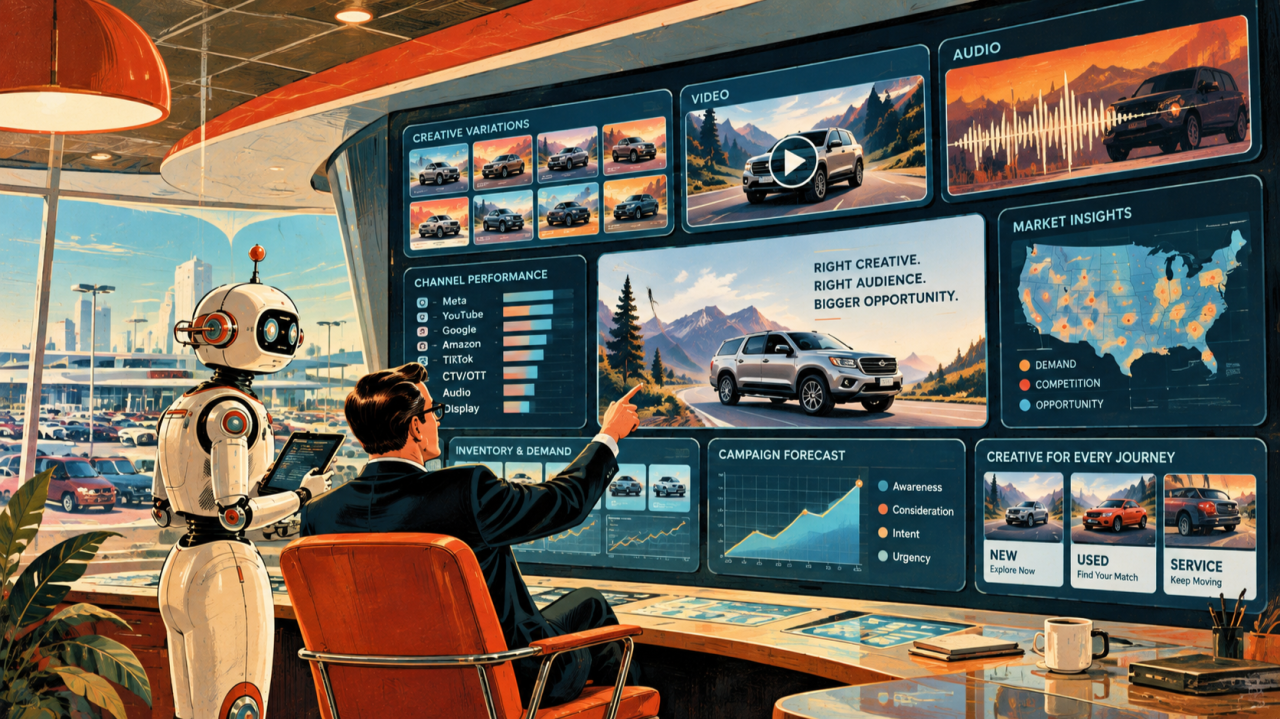
While conversational and agentic AI focus on customer interaction, a much larger opportunity exists on the decision-making side of marketing.
Every dealership today is generating an enormous amount of data across its advertising ecosystem:
- Search behavior
- Inventory shifts
- Audience engagement
- Creative performance
- Geographic demand patterns
- Historical sales cycles
Taken together, these signals represent millions of potential data points that influence advertising performance. Yet most advertising decisions are still made using a handful of reports and human interpretation. Most often, budget shifts happen monthly. Campaign changes happen periodically. Optimization happens after performance is already visible.
In a market that moves as quickly as automotive retail, that approach creates lag.
What if Advertising Worked More Like Day Trading?
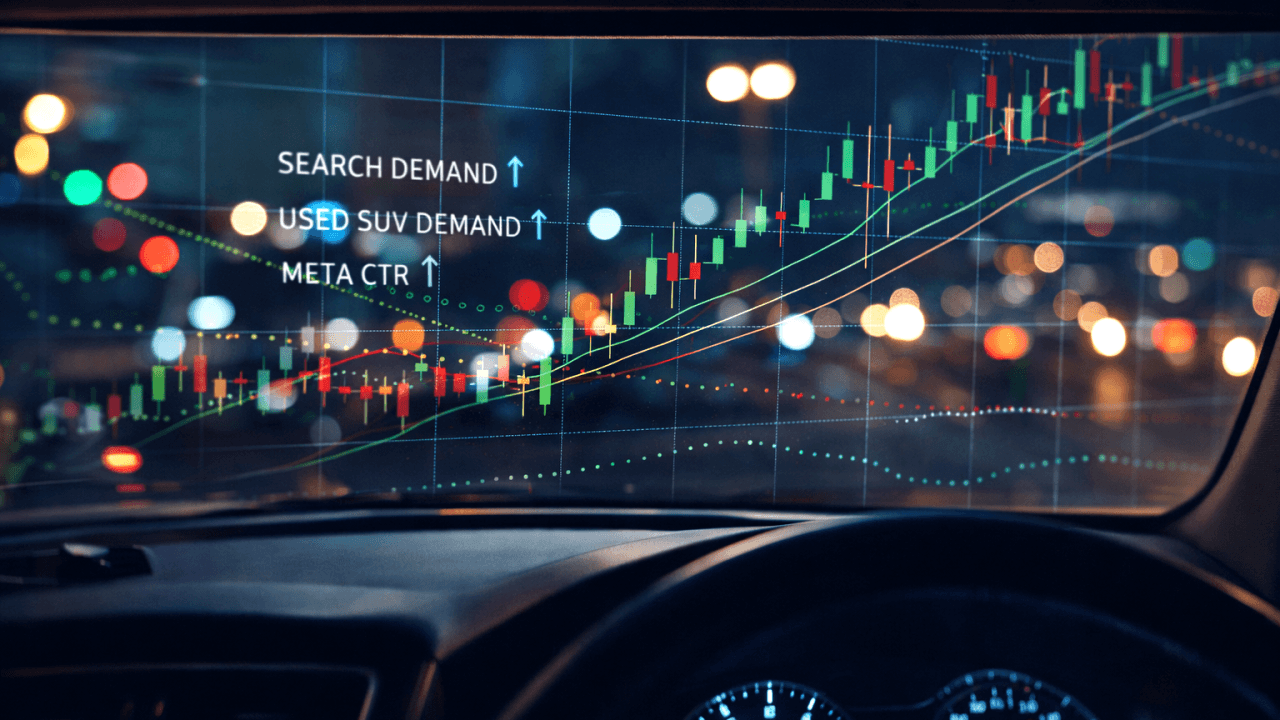
A better way to think about modern advertising could be through the lens of financial markets. Day traders evaluate enormous volumes of signals continuously; Price movement, Market momentum, Volume changes , External news, Historical patterns.
Capital moves dynamically based on probability.
Modern advertising should work the same way.
AI systems can evaluate signals such as; Search demand trends, Inventory availability, Audience behavior patterns, Creative engagement signals, Geographic performance shifts
Investment can then move dynamically toward the highest probability of creating incremental shoppers or generating sales or service demand.
Humans Still Set the Strategy
None of this removes the importance of human strategy.
AI can analyze signals and execute decisions quickly, but it still requires clear direction.
Humans define the business priorities:
- Should the focus be market share growth or used vehicle velocity?
- Should the strategy prioritize conquesting competitors or defending the core market
- Should fixed ops retention become a primary growth driver?
Those decisions require both experience and an understanding of dealership operations.
Once the strategy is defined, AI becomes the execution engine.
The Future of the Automotive Digital Agency
This shift will change the role of the automotive digital agency.
Agencies will no longer be defined simply by their ability to manage campaigns or produce creative.
The real value will come from building systems that can:
- Process massive volumes of data
- Identify patterns humans cannot see
- Allocate budget dynamically
- Continuously improve performance
In other words, the future agency will operate more like a decision engine than a campaign manager.
The Real Question, IMO…
The real question is not whether AI belongs in automotive marketing.
That answer is already clear.
The real question is where it could be applied.
Conversational and agentic AI can improve speed, responsiveness, and customer experience. That matters. Faster responses to shoppers can absolutely improve conversion. But there may be an equally important opportunity emerging elsewhere.
Should AI focus only on answering questions from shoppers?
Or should it also help decide something far more consequential:
Where millions of advertising dollars should move next?
Because if AI can both improve customer conversations and guide smarter marketing investment, the impact on dealership performance could be far greater than either one alone. And that may be where the next real evolution of automotive AI begins.