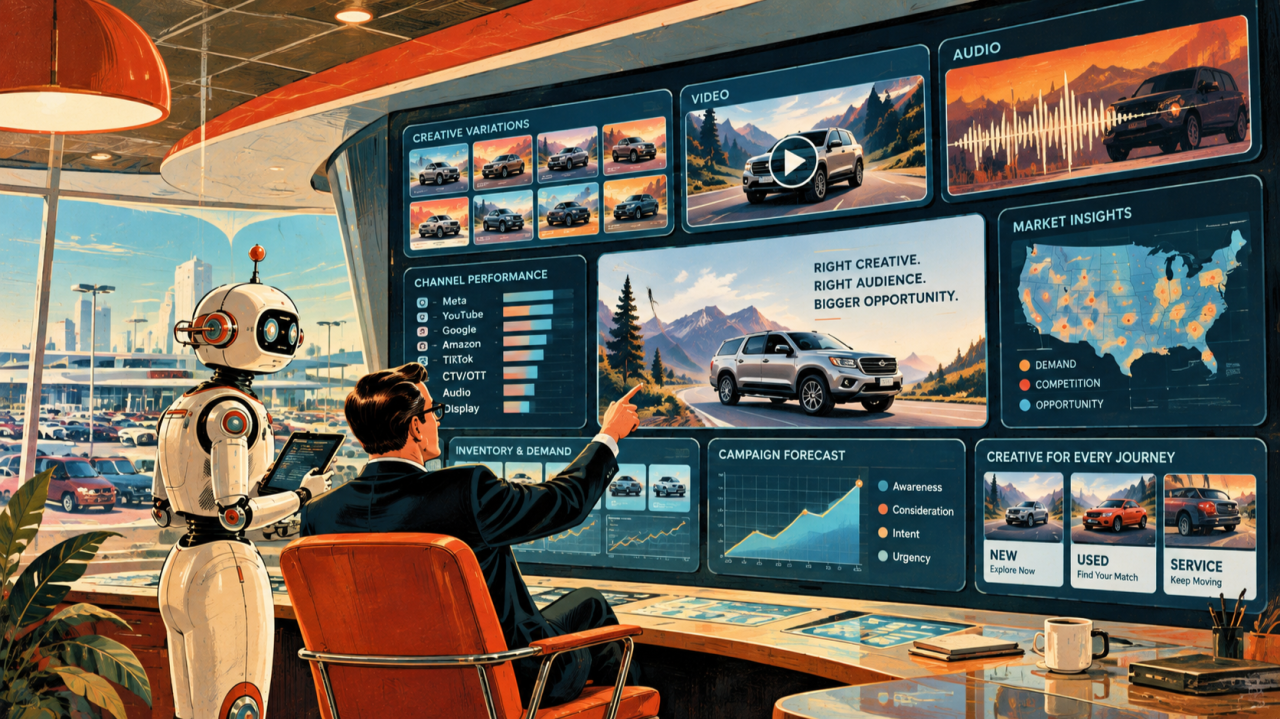

For years, dealerships have searched for the perfect budget split.
20% awareness. 30% consideration. 50% conversion – Or some variation of it.
The problem is that shoppers do not move through the funnel in a clean, predictable line anymore. Their attention shifts constantly. Platforms evolve. Inventory changes. Incentives change. Market conditions change. Competitors change.
And most importantly, consumer behavior changes. That means rigid allocation models often fail the moment the market moves.
The dealerships performing at the highest level today are not building static media plans. They are building flexible systems that can shift budget quickly based on real shopper behavior and performance data.
The Funnel Still Matters. The Allocation Formula Does Not.
The automotive funnel is still incredibly important.
Awareness creates future demand. Consideration keeps your dealership in the conversation. Intent and urgency convert shoppers already moving toward a decision. Ignoring any stage creates problems.
The issue is when dealers treat budget allocation like a fixed formula instead of a living strategy.
A dealership may need to lean more heavily into upper funnel activity during periods of lower demand creation. Another may need to shift investment toward urgency messaging when incentives improve or inventory ages. Seasonal changes, OEM programs, interest rates, and local competition all influence where dollars should move.
The allocation should follow the market, not a spreadsheet someone built six months ago.
Auto Shoppers Do Not Live on One Platform
One of the biggest mistakes in digital advertising is assuming the funnel exists entirely inside paid search.
It does not.
Modern automotive shoppers move across platforms constantly:
- Google and Bing for active research
- Facebook and Instagram for discovery and social proof
- YouTube and Streaming Video for education and influence
- Pinterest for early inspiration and lifestyle alignment
- TikTok for discovery and attention
- Reddit for validation and community discussion
- Streaming Audio and SiriusXM for reach and frequency during daily routines
- Display and Programmatic for visibility across the open web
The modern automotive buying journey is fragmented, non-linear, and heavily influenced long before someone searches for a dealership name.
That means budget allocation cannot simply be about “where leads came from last month.” It has to account for where influence is actually happening.
Data Should Drive Movement
The best media strategies are responsive.
Not reactive. Responsive.
There is a difference.
Reactive advertising chases short-term spikes and emotional decision making. Responsive advertising uses data to identify changes in shopper behavior and adjust intelligently.
That could mean increasing upper funnel investment when search volume softens. Expanding video spend when engagement rises across social and CTV. Pulling harder into urgency campaigns when incentives improve. Reallocating budget geographically based on ZIP-level performance. Shifting creative mix based on inventory availability. Or reducing dependence on expensive lower-funnel bidding wars.
The key is that these decisions are driven by performance signals, trend analysis, and forecasting. Not guesses. Because once advertising decisions become emotional, efficiency usually disappears.
The Market Moves Too Fast for Static Advertising
Many dealership media plans are still managed like static annual budgets. The problem is the market is moving too fast for that approach.
Consumer demand changes weekly. Platform costs fluctuate daily. Competitors increase or reduce spend without warning. OEM incentives shift buying behavior almost overnight.
A media strategy that worked 90 days ago may already be outdated. That is why flexibility matters more than fixed percentages. The goal is not finding the perfect budget allocation one time. The goal is building a marketing system capable of adapting continuously without losing funnel coverage or visibility.
The Best Allocation Strategy Is an Integrated One
Dealerships do not need to be everywhere just for the sake of being everywhere. They need to be present where shoppers are spending time and capable of adjusting investment as behavior changes.
That requires an integrated omnichannel strategy where channels work together instead of competing against each other.
Search captures intent. Social expands reach. Video builds influence. Streaming Audio increases frequency. Programmatic reinforces visibility. Retargeting reconnects shoppers already in motion.
When those channels operate together, budget allocation becomes far more effective because the entire media mix becomes more efficient.
And in a market where attention shifts constantly, efficiency belongs to the dealerships that can move with it.