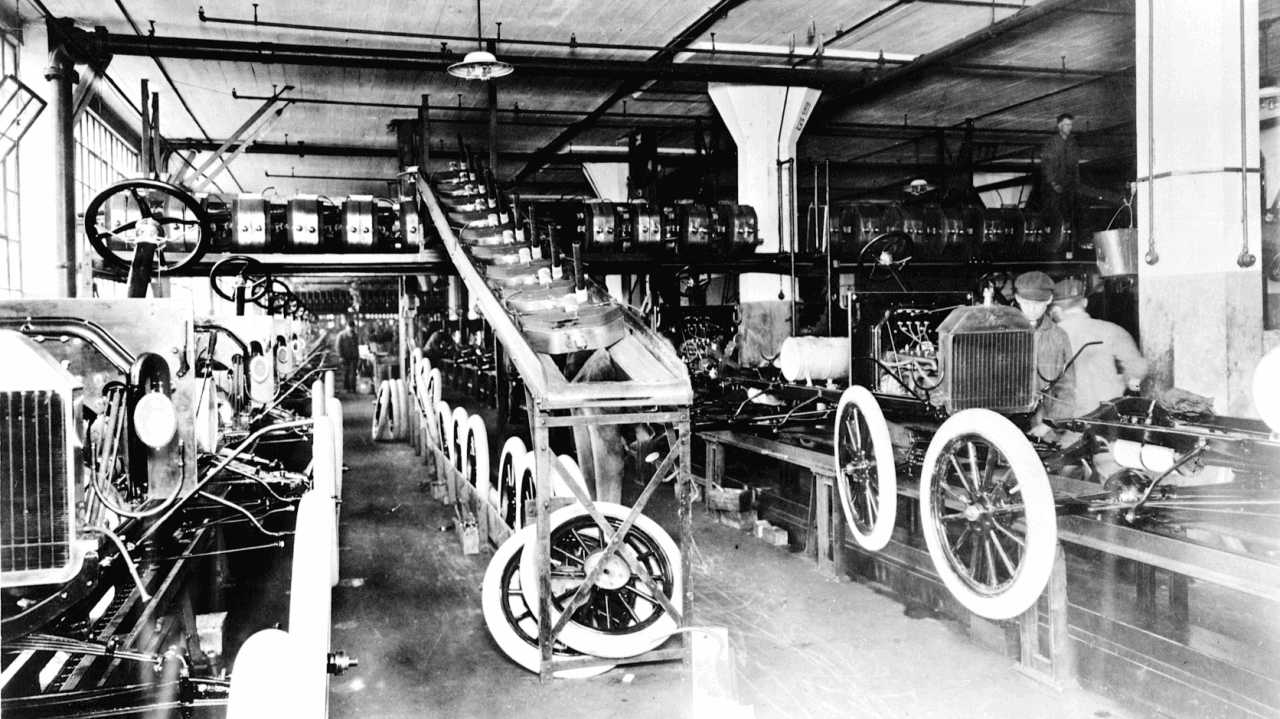
In 1913, Ford’s moving assembly line changed what was possible in automobile production.
The breakthrough was not simply speed. Ford created a coordinated system in which every person, tool, and process worked together toward the same outcome.
Modern omnichannel marketing faces a similar execution challenge.
When new incentives arrive, the clock starts. Search copy needs to change. Graphics and videos need to be created. Campaigns, landing pages, and inventory feeds need to be updated.
If it takes days or weeks for an offer to reach every channel, the dealership does not have an omnichannel strategy.
It has a collection of channels waiting on a production process.
As we explored in our previous article, omnichannel marketing is not simply being present on multiple platforms. It is aligning data, media, creative, and the dealership website around one connected customer journey.
Automation is what makes that possible at scale.
Why Omnichannel Breaks Down
According to Salesforce, marketers use an average of 10 customer engagement channels. High-performing marketers personalize experiences across an average of six. Yet only 31% are fully satisfied with their ability to unify data. (Salesforce)
On paper, that sounds like a technology problem. Inside a dealership’s marketing operation, it quickly becomes a timing problem.
Every new incentive, price change, inventory priority, or service offer can trigger dozens of updates. Each platform has its own dimensions, formats, targeting rules, landing pages, and approval processes.
When every update depends on a separate manual handoff, campaigns become fragmented. One channel promotes the current incentive while another is still running last month’s message. Traffic reaches a page that does not match the ad that generated the click.
The dealership may be advertising everywhere, but the consumer is not experiencing one connected strategy.
A message that reaches every channel two weeks late is not omnichannel. It is coordinated irrelevance.
What Automation Actually Changes
Automation turns an omnichannel plan into something that can actually be executed.
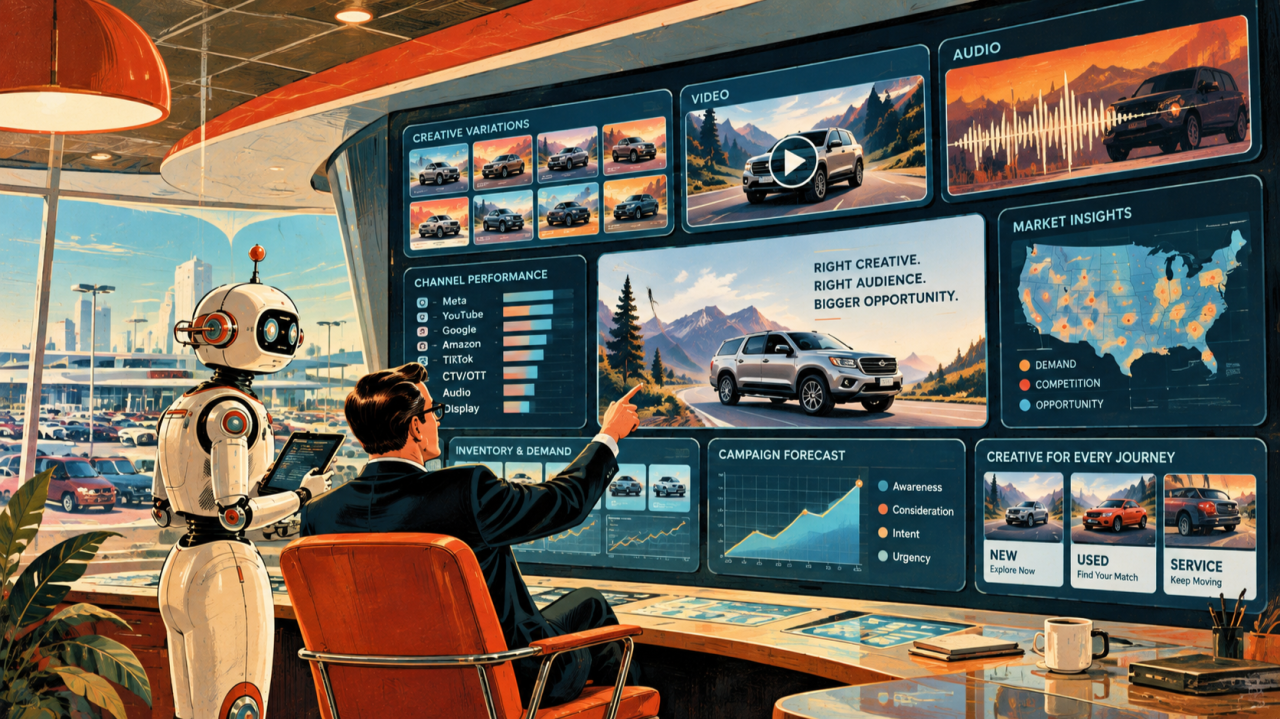
One approved offer can be adapted into channel-specific creative. Inventory changes can flow into dynamic campaigns. Video, graphics, copy, and audio can be created for different audiences and stages of the buying journey without starting over every time something changes.
That does not mean running the same advertisement everywhere.
A 15-second video has a different job than a paid search ad. Streaming audio should not sound like someone reading a Meta post. A shopper seeing the dealership for the first time should not receive the same message as someone actively comparing a specific vehicle.
The strategy remains connected, but the execution fits the channel and the consumer’s stage in the journey.
Automation removes the production bottlenecks that force dealerships to choose between speed and relevance. It also gives people more time to focus on the decisions that should not be automated: which vehicles need support, where the dealership can gain share, what message will move the market, and where the next dollar should be invested.
Automation is not the strategy. It keeps the strategy from getting buried under manual work.
Why Speed Matters
Automotive advertising operates on a compressed clock.
New incentives, aged inventory, model priorities, sales objectives, and competitive pressures can change every month. Creative needs to be developed and deployed while those opportunities still have enough time to influence the outcome.
Speed matters after launch too. Nielsen found that only 32% of marketers measure media spending holistically across digital and traditional channels. (Nielsen)
That makes it difficult to see how channels are working together or where budget should move next.
A connected system can identify where demand is being created, where intent is being captured, and which business priorities need more support. Automation turns those insights into action while there is still time for the changes to matter.
Ford’s assembly line did not succeed because it added more workers or more stations. It succeeded because it connected the entire production process.
The same principle applies here.
The modern dealership does not need more places to advertise. It needs a system capable of making those places work together.