I’m sure there are hundreds of articles out there making some version of the same argument: AI is powerful, but we still need humans.
I don’t disagree. I just don’t think that’s the interesting part anymore.
AI is getting very good at doing work that, not long ago, required a person. It can analyze thousands of signals, identify patterns, create content, recommend where to move money and, increasingly, take action without waiting for someone to tell it what to do. The question isn’t whether we should keep a human somewhere in that process. It’s where human judgment actually makes the outcome better.
Because simply keeping a person involved doesn’t guarantee that it will.
The real value comes from having someone who understands the business well enough to recognize when a perfectly reasonable AI recommendation is wrong for the situation in front of them.
That’s an important distinction, particularly in automotive, where AI adoption is moving much faster than most people probably realize.
Adoption Is the Easy Part
According to Cox Automotive’s 2026 AI in Auto Retail Tracker;
82% of dealers are already using AI in some capacity. But adoption and impact aren’t necessarily moving at the same pace. While 69% of dealers expected AI to drive sales and revenue growth, only 22% of AI users reported seeing that growth so far. Accuracy and errors are also among dealers’ biggest concerns. (Cox Automotive)
Simply having access to AI isn’t much of a competitive advantage anymore. How well an organization feeds it, evaluates it and applies what it produces is becoming much more important.
Think about that in the context of advertising.
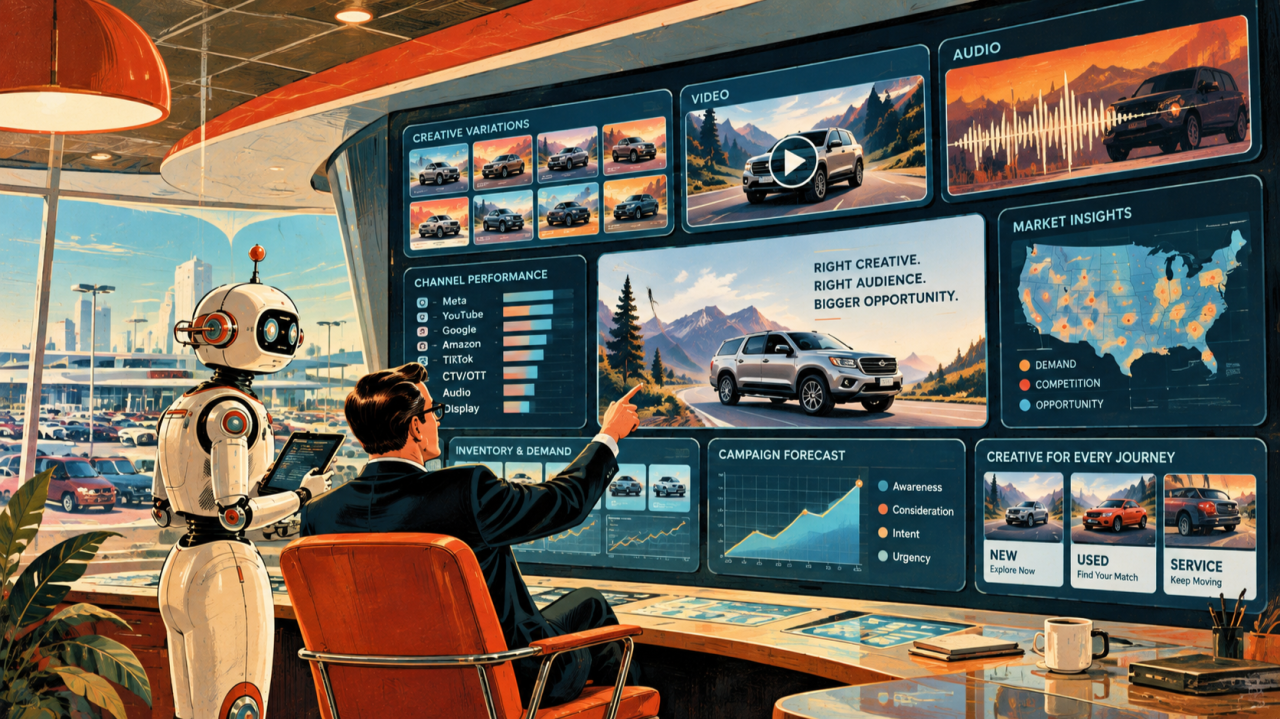
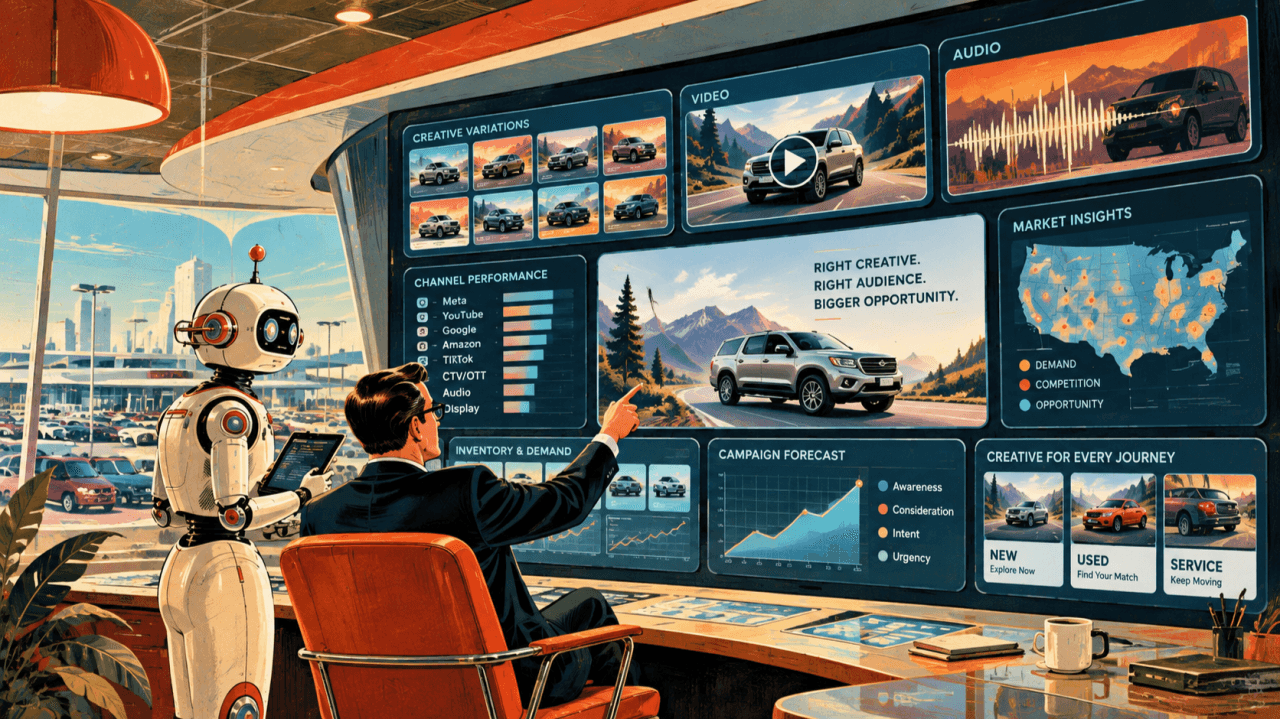
An AI system could look across a dealership’s inventory, market demand, competitive activity and advertising performance and recognize that a particular model is sitting at 70 days’ supply. Search demand is increasing, competitors are gaining share and an OEM incentive has just made the offer more compelling. Based on those signals, the system recommends shifting more media toward that model.
That’s exactly the kind of work we should want AI doing. A person shouldn’t have to spend hours digging through reports to find something a machine can identify in seconds.
But maybe several of those vehicles are already spoken for. Maybe the dealer is intentionally protecting gross. Maybe another shipment arrives next week. Or maybe the store has already hit its OEM objective and the priority for the final few days of the month is somewhere else.
The AI’s analysis may be completely logical based on the information available to it. It just might not be the right business decision.
Over time, more of that context will become data too. In my opinion, it should. But even as AI gets a more complete view of the business, someone still needs to understand what the dealership is trying to accomplish and whether the action being recommended actually moves it in that direction.
When a Good Answer Becomes the Wrong Decision
Research outside automotive shows just how important that distinction can be.
Researchers from Harvard Business School, Wharton, MIT and Boston Consulting Group studied 758 BCG consultants performing realistic knowledge-work assignments. When the assignments fell within AI’s capabilities, consultants using GPT-4 completed 12.2% more tasks, worked 25.1% faster and produced significantly higher-quality work.
Then researchers gave them a task intentionally designed to sit outside AI’s capabilities. Consultants using AI were 19 percentage points less likely to produce the correct answer than those working without it. The researchers described this uneven boundary between what AI does extremely well and what it does poorly as the “jagged technological frontier.” (Harvard Business School)
What makes that finding so interesting isn’t that AI sometimes gets things wrong. Everyone already knows that. It’s that capable people can perform worse when they trust AI in the wrong situation.
And simply putting a human in the loop doesn’t automatically fix it. If a system makes a recommendation and a person simply clicks approve because the output looks reasonable, we haven’t added much intelligence to the process. We’ve added another step.
The answer isn’t simply human-in-the-loop. It’s expert-in-the-loop.
AI Still Has to Learn the Business
Across automotive, the conversation is already moving beyond whether AI belongs in the dealership. The more important question is where it should operate autonomously and where experience, context and judgment still change the outcome.
Advertising is a good example.
AI can monitor thousands of signals continuously, identify changes in demand, analyze inventory and competitive activity, forecast outcomes and find opportunities faster than any person realistically could. That’s exactly what we should want it doing.
The same is true for creative. AI can produce and adapt image, video and audio at a scale that would have been nearly impossible just a few years ago. Offers can change quickly. Messaging can become more localized. Creative can respond to inventory, demand and where a customer is in their buying journey.
But more creative isn’t automatically better creative, just as more data doesn’t automatically lead to better decisions.
Someone still has to understand the market, the dealership and the objective well enough to know whether the message makes sense. Is it accurate? Is it relevant to what the dealership actually needs to accomplish? Does it reflect the brand? And, sometimes most importantly, is it actually good?
That’s where the combination becomes powerful. AI creates the scale and speed. Human judgment makes it relevant.
Human Review Has to Evolve With AI
That doesn’t mean slowing AI down. If a system identifies an opportunity, analyzes the data, creates the assets and recommends an action, only to wait three days for five people to approve every step, we’ve missed a large part of the benefit.
As the technology improves, the relationship should evolve. Today, an expert may review a recommendation before the system acts. Tomorrow, the system may operate within established guardrails and only surface the exceptions that require attention. The human role moves away from manually touching every decision and toward setting strategy, adding context and making sure the system is solving for the right business outcome.
AI gives us the ability to apply intelligence at a scale and speed we’ve never had before. But scale also means a bad assumption can travel faster, a poor decision can be repeated thousands of times and an answer that looks right can be acted on before anyone asks whether it makes sense.
The companies that get the most from AI won’t be the ones that automate everything simply because they can. They also won’t be the ones that insist a person touch every decision. They’ll be the ones that figure out what machines should do, what people should do and where expert judgment creates the most value.
Because the real opportunity isn’t replacing human judgment with artificial intelligence.
It’s using artificial intelligence to put better human judgment to work at a scale that was never possible before.