
The Problem with how Dealers are measuring marketing performance today.
Most dealerships are still measuring marketing based on what’s easiest to track, not what actually drives growth.
Number of leads. Cost per lead. Last-click attribution. Form fills.
It looks clean. It gives you numbers to report. But it misses the point. These metrics tell you where a customer showed up, not what made them choose you.
And if you are only measuring the last step, you are making decisions with incomplete information.
So are you measuring what worked, or just what showed up last?
Where Measuring CPL Breaks Down for Automotive sales.
Last-click attribution has quietly reshaped how budgets get allocated.
It rewards the channel that captures demand, not the ones that create it. So spend keeps consolidating into search and retargeting, while upper and mid-funnel efforts get reduced or eliminated.
At first, performance looks efficient. You are capturing existing demand at a lower cost. But over time, that demand pool shrinks. Traffic plateaus. Lead flow becomes inconsistent. You end up competing harder for the same in-market buyers.
Cost Per Lead creates a similar illusion.
You can drive it down by opening up targeting or pushing more aggressive lead tactics. The number improves, but lead quality drops. Sales teams feel it immediately through lower close rates and weaker gross.
Nothing is actually improving. It is just being measured differently.
What Actually Matters for Dealerships in 2026
The shift is not about adding complexity. It is about looking at performance the way buyers actually behave.
- First, focus on trend over snapshots. Marketing is momentum. Weekly traffic patterns, new users, and engagement tell you whether demand is building or fading. If those signals are moving in the right direction, future conversions follow. If they are flat, you are not creating enough new demand.
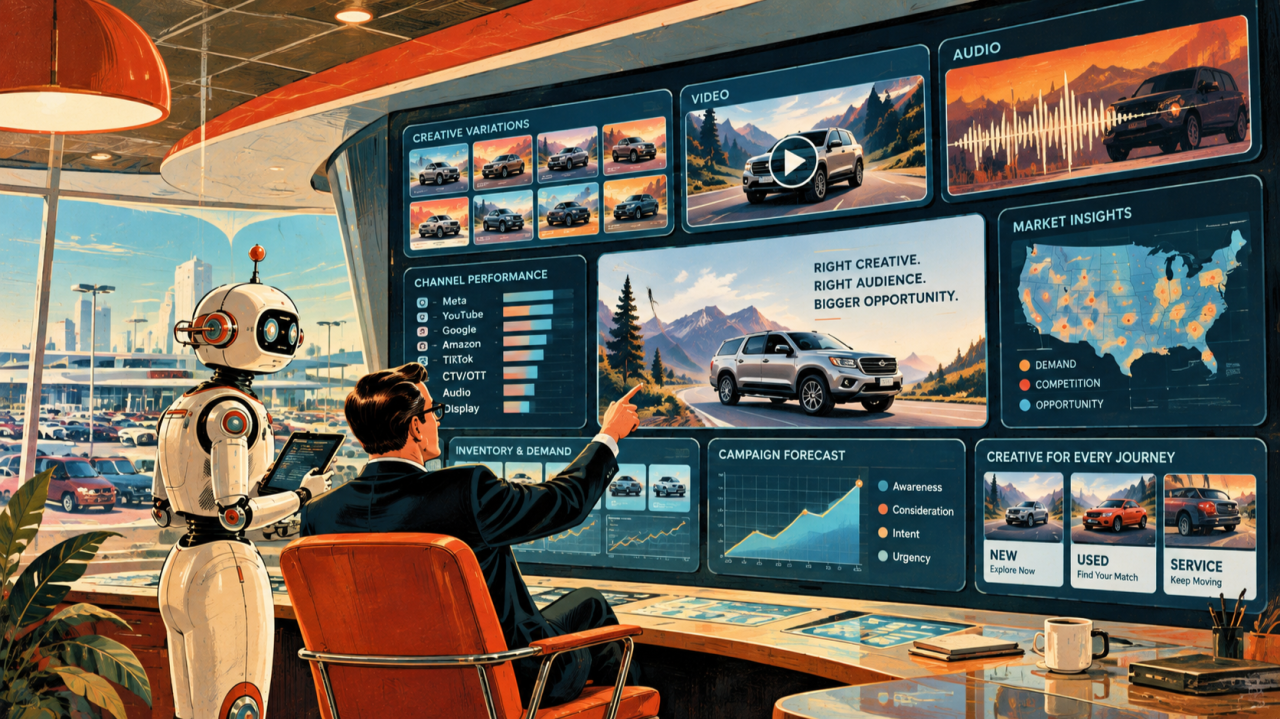
- Second, think in terms of the full funnel. Buyers do not go from click to conversion in one step. They move through awareness, consideration, intent, and urgency. Different channels influence different stages. When those channels are working together, performance stabilizes. When they are not, you see volatility and over-reliance on a few tactics.
- Third, shift from cost per lead to cost per buyer. Leads are easy to generate. Buyers are not. When you measure against actual sales outcomes, it forces alignment between marketing and real business performance. It also makes it easier to diagnose problems. Poor audience quality, weak mid-funnel engagement, or breakdowns in the store all become more visible.
- And finally, performance has to be viewed in context. Market conditions, incentives, inventory levels, and competitive pressure all influence results. Static reporting misses that. The best operators adjust based on what is happening now, not what worked last month.
The Bottom Line for your Auto Dealership.
This is not about abandoning metrics. It is about upgrading them to match how marketing actually works.
From CPL to cost per buyer. From last-click to full-funnel impact. From isolated results to directional trends.
Because the goal is not to generate more activity. It is to create demand, capture it, and convert it profitably.
And if you are not measuring that, you are guessing.Justin Friend click to view the linkedin profile of : Justin Friend