Last week, we were reviewing a new set of ad creative with a dealership. One of the images featured a vehicle driving along a suburban road that looked strikingly familiar.
The client looked at it for a moment, smiled, and said,
“That literally looks like it’s a few streets behind our store.”
It wasn’t.
But that comment perfectly captured something many dealerships overlook.
The best advertising doesn’t just showcase the right vehicle or the right offer. It feels like it belongs. When creative reflects the roads shoppers drive, the neighborhoods they recognize, and the environment they experience every day, it creates an immediate sense of familiarity. That familiarity builds credibility long before anyone reads the headline or clicks the ad.
For years, localization has been viewed primarily as a media strategy. Dealers talk about targeting ZIP codes, adjusting radiuses, or focusing spend around specific markets. Those are important decisions, but they’re only part of the equation.
The creative itself should be just as localized as the audience you’re trying to reach.
Consumers Notice More Than You Think
Advertising works best when it feels authentic.
Research published in Computers in Human Behavior found that
advertising aligned with a consumer’s geographic environment is perceived as significantly more relevant than advertising that feels disconnected from where they live.
Relevance increases attention, and attention is the first step toward action.
That may sound obvious, but it’s surprising how often dealerships unintentionally create the opposite effect.
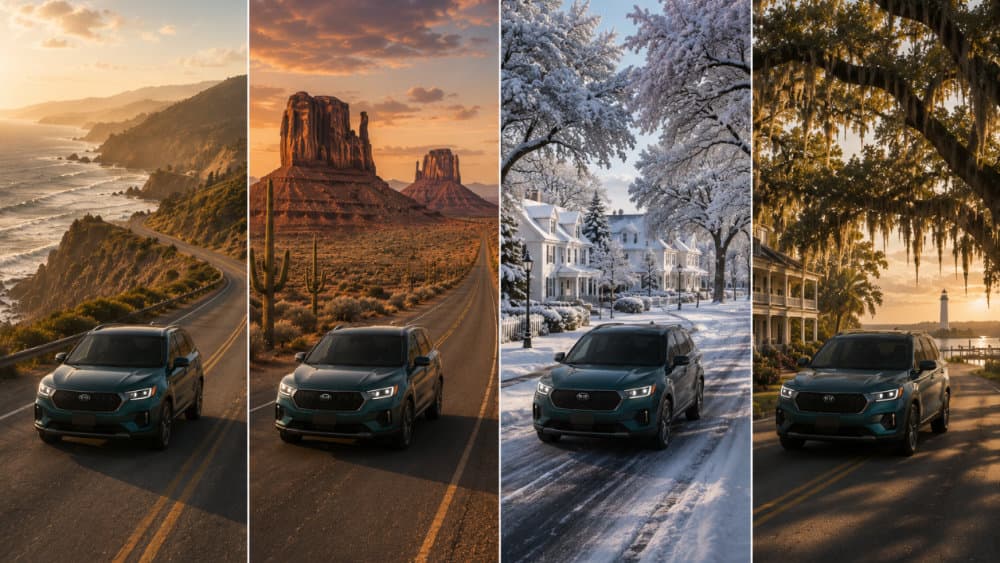
A dealership in Southern California shouldn’t feature vehicles driving through fresh snow. A retailer in upstate New York probably shouldn’t showcase palm trees swaying in the background. A desert highway feels out of place for a dealer in coastal Florida, just as a beachfront scene doesn’t belong in rural Kansas.
Most shoppers will never stop and think, “Those palm trees don’t belong.” They don’t have to. Their brain notices before they consciously do. The advertisement simply feels less believable.
When creative doesn’t reflect the shopper’s world, it becomes easier to dismiss because it feels like it could have been created for any dealership in America.
Local Means More Than Geography
Hyper-Local creative isn’t about recreating a specific street corner or inserting a famous landmark into every advertisement.
It’s about reflecting the character of the community.
That includes the weather, the landscape, the roads, the architecture, the season, and even the lifestyle people associate with living there. A truck campaign in Texas should feel different than one in downtown Chicago. A family SUV driving through the mountains of Colorado tells a different story than one cruising the coastline of Southern California. Neither approach is better. They’re simply speaking to different audiences.
That’s why our client’s comment stood out.
They weren’t impressed because we had perfectly recreated their neighborhood. They were impressed because the creative felt familiar. It looked like the vehicle could have been photographed minutes from their showroom. That subtle sense of authenticity immediately made the advertising feel more believable.
Consumers may not consciously recognize every local detail, but they absolutely recognize when something feels genuine.
One Version No Longer Fits Every Market
For decades, dealerships had little choice but to create one version of everything.
- One television commercial.
- One photoshoot.
- One collection of images.
Those same assets were expected to work in every campaign regardless of geography, season, or audience because creating dozens of variations simply wasn’t practical. Production was expensive. Revisions took time. Every additional version required more people, more approvals, and more budget. Today, that limitation has largely disappeared.
AI-assisted creative production, when done correctly, makes it possible to produce localized imagery at a scale that would have been nearly impossible just a few years ago. Backgrounds can reflect local environments. Seasonal imagery can change throughout the year. Creative can adapt to regional inventory, weather, and promotions without starting from scratch every time.
The conversation has shifted from, “Can we afford multiple versions?” to, “Why would every market receive the same creative?”
That’s a very different way of thinking about dealership advertising.
Relevance Is Becoming the Competitive Advantage
Consumers are exposed to thousands of ads every day. Most disappear almost as quickly as they’re seen because they feel generic.
The dealerships earning attention aren’t always spending the most. They’re creating ads that feel like they belong.
That doesn’t require flashy production or elaborate storytelling. Sometimes it’s as simple as showing the right vehicle on the right road, in the right season, surrounded by an environment shoppers instantly recognize.
I keep coming back to our client’s reaction.
“That literally looks like it’s a few streets behind our store.”
And that is exactly the point.
The goal isn’t to recreate a neighborhood. It’s to create ads that feel like they were made for the people who live there. When shoppers can picture that vehicle on the roads they drive every day, the creative becomes more believable, the dealership feels more familiar, and the advertising becomes more effective.
Sometimes the smallest creative decisions create the biggest competitive advantage.